Governance & Secretariat
PPPSK operates through a clear and robust governance structure that promotes transparency, professionalism, and effective service delivery.
Governing Council
The leadership team steering PPPSK's vision of professional excellence and evidence-informed policymaking across Kenya and Africa.
Hon. Geoffrey Ruku CBS
Cabinet Secretary
Public Service, Talent Development and Special Programs
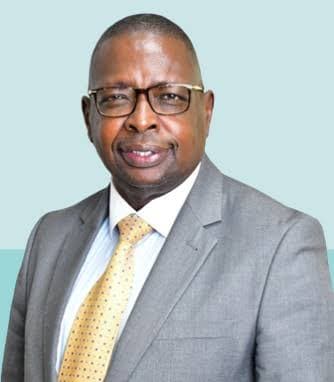
- ▪Acting High Commissioner of the Republic of Kenya to Canada.
- ▪Former Principal Secretary, State Departments for Labour & Skills Development and Shipping & Maritime Affairs.
- ▪Former Presidential Advisor on the Social Sector.
- ▪Expert in public administration, diplomacy, labour policy, maritime governance, and international cooperation.
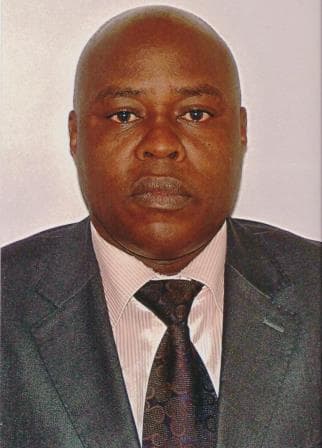
- ▪Full Professor of Strategy, Governance and Public Policy at Kenyatta University.
- ▪Executive Dean, School of Law, Arts and Social Sciences, Kenyatta University.
- ▪Member, Harvard Business Review Advisory Council.
- ▪Recipient of national recognition from the President of Kenya for scholarship and research, 2024.
- ▪Prolific author and consultant to governments, development partners, and public institutions.

- ▪Secretary General of PPPSK — chief executive officer of the Society.
- ▪Administrative Officer, Division of Research and Technology Development, Technical University of Kenya.
- ▪Former Continental Project Officer, Association of Technical Universities and Polytechnics in Africa (ATUPA).
- ▪Key architect of the Africa Public Policy Continental Convention (APPCC) and the ICPPI.
- ▪PhD Candidate in Public Policy and Management, Kenyatta University.

Dr. Faith Namanga
PhD
- ▪University Lecturer at Pwani University — teaching, mentoring, and researching public policy and governance.
- ▪PhD in Public Policy and Management, Kenyatta University.
- ▪Career background spanning clinical practice and health systems management in Kenya's health sector.
- ▪Oversees PPPSK's financial governance, resource stewardship, and institutional sustainability.

Michael S. R. Denadi
- ▪Vice Chair, Finance and General Purpose Committee, PPPSK.
- ▪PhD Candidate in Public Policy and Management, Kenyatta University.
- ▪Holds MPA from UNICAF University and MA in International Relations.
- ▪Multidisciplinary background in philosophy, international relations, and public administration.
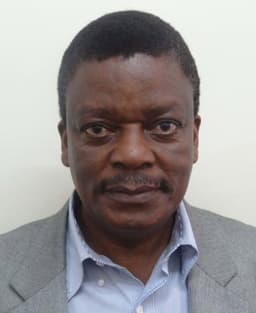
Prof. Benson Akong'o Ateng'
PhD
- ▪Associate Professor of Economics, Technical University of Kenya.
- ▪30+ years at the World Bank as Economist, Lead Operations Officer, and Country Manager.
- ▪Former Chairperson, Kenya Institute for Public Policy Research and Analysis (KIPPRA).
- ▪Former Member, Monetary Policy Committee, Central Bank of Kenya.
- ▪Former Chairperson, Board of Consolidated Bank of Kenya.
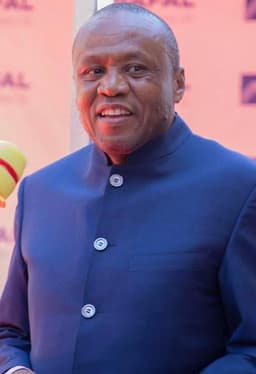
Vincent Rapando
- ▪Programs Manager, Chandaria Foundation — one of Africa's leading philanthropic institutions.
- ▪Leads high-impact programmes in education, youth empowerment, and environmental conservation.
- ▪Builds multi-sector partnerships across government, civil society, and the private sector.
- ▪Contributor to national and international forums on sustainability, climate resilience, and youth leadership.

Dr. Benjamin Kaviku Kimolo
PhD
- ▪Director, Public Policy and Research, Nairobi City County Government — leads the County's policy formulation, research, and evaluation agenda.
- ▪PhD in Public Policy and Management, Kenyatta University — doctoral research on governance mechanisms in Kenya's National Police Service.
- ▪Has strengthened Nairobi City's policy capacity through strategic partnerships with KIPPRA across tourism, civic participation, and institutional development.
- ▪Author and co-author of publications on governance, transport policy, and university–government research partnerships.
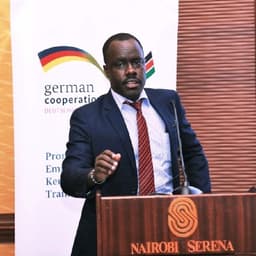
Gideon Murenga
- ▪Senior TVET and Labour Markets Advisor at GIZ Kenya — advancing technical and vocational education, skills development, and workforce integration across Kenya.
- ▪Key architect of Kenya's Dual TVET programme, coordinating partnerships with over 2,000 industries to bridge classroom learning and world-of-work readiness.
- ▪Expert in public policy for skills development, apprenticeship model design, youth employment, and private sector engagement in education.
- ▪Champions international TVET cooperation with Germany and Finland, facilitating knowledge exchange, institutional collaboration, and cross-border skills partnerships.
Governance Structure
The Society is governed through five distinct bodies, each with a defined mandate.
General Assembly
The supreme decision-making organ comprising all registered members of the Society. It provides democratic representation and strategic oversight at the highest level.
- ■Comprises all registered members of PPPSK
- ■Supreme decision-making authority
- ■Approves key policies and strategic direction
- ■Elects the Executive Board
- ■Meets annually with provision for special meetings
Advisory Board
Chaired by the Patron of the Society, the Advisory Board provides strategic guidance and ensures alignment with the Society's long-term vision and values.
- ■Chaired by the Patron of the Society
- ■Composed of eminent professionals and thought leaders
- ■Provides strategic guidance to the Governing Council
- ■Ensures alignment with long-term vision and values
- ■Shapes external engagement and strategic direction
Governing Council
The strategic leadership body that provides oversight on behalf of the General Assembly, formulating policy and ensuring good governance and accountability.
- ■Provides strategic leadership and oversight
- ■Formulates organisational policies
- ■Mobilises resources for the Society
- ■Ensures good governance and accountability
- ■Led by the Chairperson who represents the Society
Committees of the Governing Council
Formal governance committees established by the Governing Council, each chaired by an Executive Board member with a defined thematic mandate.
- ■Each chaired by an Executive Board member
- ■Established by the Governing Council with defined mandates
- ■Provide oversight and guidance on specific thematic areas
- ■Feed recommendations into Council decision-making
- ■Support evidence-based policy and programme delivery
Communities of Practice (CoP)
Open peer networks for PPPSK members across six thematic clusters.
- ■Governance & Public Institutions
- ■Human Development
- ■Economic Transformation
- ■Environment & Sustainable Development
- ■Digital Transformation & Innovation
- ■International Affairs & Regional Integration
Editorial Board
Maintains the quality, credibility, and relevance of the Society's scholarly and professional publications, ensuring academic and ethical integrity.
- ■Oversees quality of scholarly publications
- ■Manages peer review processes
- ■Sets editorial standards and content development
- ■Ensures academic and ethical integrity
- ■Contributes to public policy discourse globally
Organisational Chart
A visual overview of how governance bodies and secretariat units relate to one another.
General Assembly
Supreme Decision-Making Body
All registered PPPSK members
Advisory Board
Strategic Guidance
Chaired by the Patron
Governing Council
Strategic Leadership & Oversight
Led by the Chairperson
Communities of Practice
Peer networks by sector
6 thematic clusters
Secretariat
Led by Secretary General
8 functional units
Committees of the Governing Council
Thematic collaboration
Editorial Board
Scholarly publications
General Assembly
Supreme Decision-Making Body
All registered PPPSK members
Advisory Board
Strategic Guidance
Chaired by the Patron
Governing Council
Strategic Leadership & Oversight
Led by the Chairperson
Secretariat
Led by Secretary General
8 functional units
Committees of the Governing Council
Thematic collaboration
Editorial Board
Scholarly publications
Communities of Practice
Peer networks by sector
6 thematic clusters
Secretariat Structure
The operational and administrative arm of the Society, led by the Secretary General as chief executive officer. The Secretariat executes Executive Board decisions and manages day-to-day operations through eight specialised functional units.
Membership, Outreach and Partnerships
Manages member services, stakeholder engagement, and institutional partnerships to strengthen the Society's network and influence.
Research and Policy Development
Leads policy research, position papers, and evidence-based policy engagement to inform national and regional policy decisions.
Training and Capacity Building
Designs and delivers professional development programmes, workshops, and certification initiatives for policy professionals.
Strategic Communications and Advocacy
Oversees internal and external communications, public relations, branding, and policy advocacy efforts.
Finance and Administration
Manages budgeting, financial reporting, procurement, human resources, and general administrative functions.
Programs and Strategic Initiatives
Coordinates the design, implementation, and monitoring of the Society's flagship programmes, projects, and initiatives.
Resource Mobilisation and Partnerships
Drives fundraising strategies, donor engagement, and grant development to support the Society's sustainability and growth.
Publications and Knowledge Management
Oversees the development and dissemination of journals, policy briefs, newsletters, and knowledge products for thought leadership.
Interested in contributing to our governance or becoming a member?
View Membership Plans